Available Offers
Prices updated automatically
Dualtron Official Store
$100 OFF THE Victor Luxury + 2.0
Check Price →Amazon Store
Compare on Amazon
Check Price →* Affiliate links — we may earn a commission at no extra cost to you.
Key Strengths
- ✓Impressive range of 100.0 km, significantly above the category average of 60.9 km, making it suitable for long-distance rides.
- ✓Top speed of 40.0 km/h, which is competitive but slightly below the average speed of 43.1 km/h in this category, still providing a fast ride.
- ✓Large battery capacity of 1800.0 Wh ensures sustained power for extended use, supporting its long range.
Main Drawbacks
- ✕Heavier than average at 33.10 kg, compared to the category average of 25.38 kg, which could affect portability.
- ✕Lacks detailed information on power and suspension, which are crucial for assessing performance and comfort.
Our Verdict
"The Dualtron Dualtron Victor gets the basics right but faces stiff competition at this price point. Worth considering if the price is right."
Best Suited For:
How long will the battery last for you?
Rider Weight
Score Breakdown vs. Electric Scooter Average
How we calculate Power & Speed
Beats approximately 13% of performance scooters on this metric.
⚠️Partial data — 50% of spec fields available. Score may shift as more data is added.
How we calculate Real-World Range
Beats approximately 42% of performance scooters on this metric.
How we calculate Ride Comfort
Beats approximately 3% of performance scooters on this metric.
⚠️Limited data — 33% of spec fields available. Score may shift as more data is added.
How we calculate Portability
Beats approximately 92% of performance scooters on this metric.
How we calculate Safety
Scores 0/100 based on safety/tech features.
⚠️Limited data — 0% of spec fields available. Score may shift as more data is added.
How we calculate Tech & Features
Scores 15/100 based on safety/tech features.
⚠️Limited data — 14% of spec fields available. Score may shift as more data is added.
How we calculate Build Quality
Scores 0/100 based on IP rating, brake type, and suspension quality.
⚠️Limited data — 0% of spec fields available. Score may shift as more data is added.
How we calculate Value for Money
ℹ️ Value for Money is displayed for reference only. It compares score-per-dollar against subcategory peers — higher price for the same performance means a lower value rank. This metric does not affect the Overall Score.
⚠️Partial data — 50% of spec fields available. Score may shift as more data is added.
Final ScooterRank Rating · 7 dimensions
25/100
Full Specifications
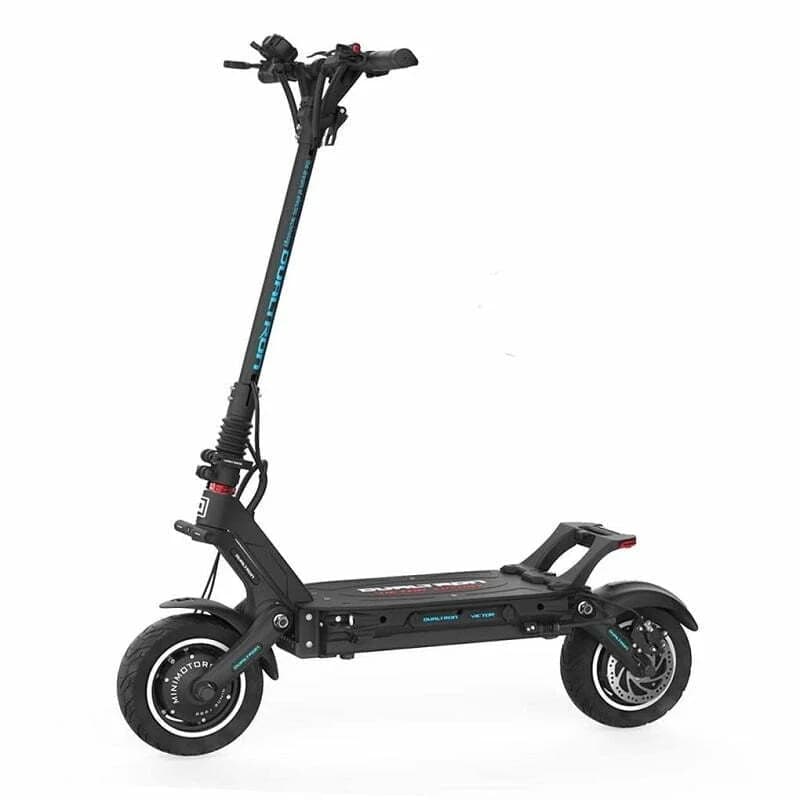
Dualtron Victor – High-Capacity 100 km Electric Scooter
With a massive 1800 Wh battery delivering an advertised 100 km range and a 40 km/h top speed, the Dualtron Victor stakes its claim as a long-distance commuter scooter. Despite weighing 33.1 kg, this Dualtron model packs ample power for flat city streets and rolling hills, but its 1.3 comfort score hints at a firm ride. Portability also takes a hit, reflected by a 3.2 rating, so lifting it on public transport or up stairs requires effort. In this review, we look beyond the spec sheet—evaluating how rider weight, terrain, and suspension choices affect real-world range and ride quality. We also explore whether the Victor’s high-capacity battery justifies its bulk, helping you decide if it’s the right dual-motor electric scooter for your daily commute or weekend adventures.
Real-World Range Insights
With an 1800 Wh battery, the Dualtron Victor claims up to 100 km of range under ideal conditions. In real-world use—carrying an 80 kg rider on mixed city roads, occasional inclines and starts—expect around 70–80 km per charge. Factors like speed habits (riding close to top speed), frequent acceleration, and hilly terrain can shave off 10–30% of the advertised range. Lower tire pressure or a heavier load will also impact efficiency. To maximize mileage, maintain tire pressures at manufacturer’s specs and ride at a steady 25–30 km/h pace for optimum energy use.
Balancing Portability and Power
At 33.1 kg, the Dualtron Victor weighs significantly more than many commuter scooters, earning a portability score of 3.2 out of 10. Its dual motors and large battery pack drive performance up but require lifting effort when boarding buses or navigating stairs. Unlike lightweight 12–15 kg urban models, the Victor demands planning for storage and transit. However, the trade-off is a robust ride quality and long-range capability unmatched by lighter scooters. If your priority is hauling your scooter upstairs daily, a lighter alternative may suit better. For riders prioritizing sustained power and range, the Victor’s mass is a worthwhile compromise.
Rider Reviews
No written reviews yet — be the first to help other riders.
Frequently Asked Questions — Dualtron Dualtron Victor
The Dualtron Dualtron Victor has a claimed top speed of 40 km/h (25 mph). This is below the performance average of 46 km/h.
The manufacturer claims 100 km (62 mi) of range per charge. Real-world range will vary with rider weight, speed, terrain, and temperature.
The Dualtron Dualtron Victor weighs 33.1 kg (73 lbs). It is heavier than the performance average of 28.05 kg.
At 25/100, the Dualtron Dualtron Victor scores below the performance average. This is 22 points below the performance average. Better-scoring options exist at similar prices — see our performance rankings for alternatives.
The Dualtron Victor has an 1800 Wh battery rated for 100 km under ideal conditions, but real-world riders can expect 70–80 km per charge when carrying an average 80 kg rider on mixed terrain. Factors such as speed, hills, and riding style can reduce this range by 10–30%.
The Dualtron Victor’s 1800 Wh battery charges fully in about 4.6 hours using the stock charger. Charging times can vary slightly depending on ambient temperature and the battery’s starting charge level, but plan for around 4 to 5 hours for a complete refill.
With a top speed of 40 km/h and a real-world range of 70–80 km, the Dualtron Victor is well-suited for long daily commutes. However, its 33.1 kg weight and firm ride—reflected by its comfort score of 1.3—mean you’ll need to consider storage, lift requirements, and suspension preferences before taking it on bus or train segments.